From 6 April 2027, landlords whose rent and self-employed income added up to more than £30,000 in the 2025/26 tax year must keep digital records and send HMRC an update every three months. The £30,000 is income before expenses, not profit, so three typical Worcester homes are enough to bring you in. Here’s how to check, what changes and what to do before April.
In short
- Who: landlords who own property in their own name (or jointly), and sole traders, whose rent and self-employed income before expenses was over £30,000 in 2025/26.
- When: from 6 April 2027. The threshold drops to £20,000 from April 2028.
- What changes: digital records, a summary to HMRC every three months, and your tax return sent through the same software.
- Breathing space: the Budget on 28 October 2026 confirmed no penalty points for late quarterly updates in 2027/28. You still have to send them all.
- Do now: work out your 2025/26 figure, speak to your accountant and pick software before spring.
Are you in? It’s income before expenses
HMRC calls this your “qualifying income”. It’s the total of your rental income and any self-employed turnover, before you take off mortgage interest, repairs, agent fees or anything else. HMRC works it out from your 2025/26 tax return, the one due by 31 January 2027.
- Counts: UK rent (and overseas rent if you’re UK resident) and self-employed turnover.
- Doesn’t count: your salary, pensions, dividends (including from your own company) and your share of a partnership’s profit.
- Jointly owned property: only your share counts. Two owners splitting £50,000 of rent equally have £25,000 each.
Here’s what that means at Worcester’s average rent of £984 a month (ONS, September 2026), for a landlord with no other self-employed income:
| Homes let at £984 pcm | Rent a year (before costs) | Making Tax Digital |
|---|---|---|
| 1 | £11,808 | Not yet: under £20,000 |
| 2 | £23,616 | From April 2028, if your 2026/27 income is also over £20,000 |
| 3 | £35,424 | From 6 April 2027 |
If you own homes jointly, halve the figures for your share. If you’re also self-employed, add your turnover: one rented home plus £20,000 of self-employed income takes you over £30,000.
Key dates
| Date | What happens |
|---|---|
| 31 January 2027 | File your 2025/26 tax return as usual. HMRC uses it to decide whether you’re in. |
| After you file | HMRC reviews your return and writes to you if you’re over the threshold. No letter doesn’t mean you’re out: checking is your responsibility. |
| 6 April 2027 | Start keeping digital records. |
| 7 August 2027 | First quarterly update. Then 7 November 2027, 7 February 2028 and 7 May 2028. |
| 31 January 2028 | Your last ordinary tax return, for 2026/27. |
| 31 January 2029 | Your first tax return through Making Tax Digital software, for 2027/28. |
What actually changes
- Digital records. For every rent payment and cost: the date, the amount and the category (the same categories as your tax return). Only your rental and self-employed records need to be digital.
- Software. HMRC doesn’t provide it. You need a product HMRC recognises; its software finder lists them. If you like spreadsheets, you can keep them, with “bridging” software to send the figures.
- Quarterly updates. A summary of income and costs every three months. They aren’t tax bills, and they don’t change when your tax is due.
- Your tax return. Sent through the same software after the year ends, by 31 January as now.
Your accountant can do all of this for you as your agent. Many already use the software.
Breathing space in the first year
Late quarterly updates normally earn penalty points, and enough points lead to a fine. The Budget on 28 October 2026 confirmed that people joining in April 2027 won’t get penalty points for late quarterly updates in 2027/28. It’s breathing space, not an exemption: you still need to send every update before you can file your tax return.
Who doesn’t need to join
- Income of £20,000 or less: exempt automatically.
- Limited companies: they pay corporation tax and aren’t part of Making Tax Digital for Income Tax.
- Partnerships: not yet. HMRC will set a timetable later.
- Digitally excluded: if using software isn’t reasonable for you, for example because of age, disability or no internet where you live, you can apply for an exemption. Preferring paper doesn’t count.
- Overseas landlords: non-UK residents are exempt for 2026/27 only. If your UK income is over £30,000, you’re in from April 2027 like everyone else.
What we’d do now
- Work out your 2025/26 figure: total rent before costs (your share), plus any self-employed turnover.
- Speak to your accountant this winter. Ask whether they’ll act as your agent and which software they use.
- Choose software before April. Start with HMRC’s software finder or your accountant’s recommendation.
- Keep your lettings money separate. One bank account for rent and property costs makes digital records far easier.
- Keep receipts digitally from 6 April 2027. A photo on your phone is fine, as long as it’s recorded in your software.
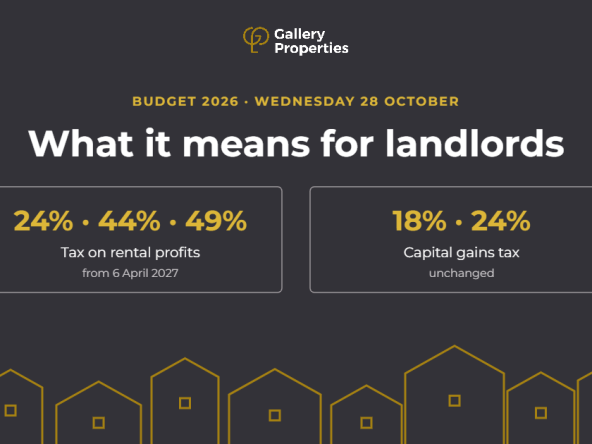
- Don’t forget the other dates. Worcestershire landlords must register on the new landlord database between 15 December 2026 and 14 March 2027, and tax on rental profits rises from April 2027 (see our Budget 2026 guide).
If we manage your property, your monthly statements already list every rent payment and every cost, by property and by date. That’s most of what your digital records need. Ask your accountant how they’d like to bring them into your software.
Getting ready for April 2027?
We don’t give tax advice, but we keep clear monthly statements for every property we manage, and we can tell you what your property would let for today.
Get my free rent valuationCall 01386 443 597WhatsApp 07518 434 214See every fee

Written by Lukasz Rusiecki, Managing Director of Gallery Properties. We’ve managed landlords’ homes across Evesham, Worcester and Worcestershire since 2010.
Last checked: 9 November 2026. This article is general information, not tax advice. The table is a simplified example; speak to your accountant about your own figures. Sources: HMRC, find out if and when you need to use Making Tax Digital; HMRC, work out your qualifying income; HMRC, exemptions; HMRC, using Making Tax Digital for the first time; HM Treasury, Budget 2026; ONS, Private rent and house prices (Worcester, September 2026).