
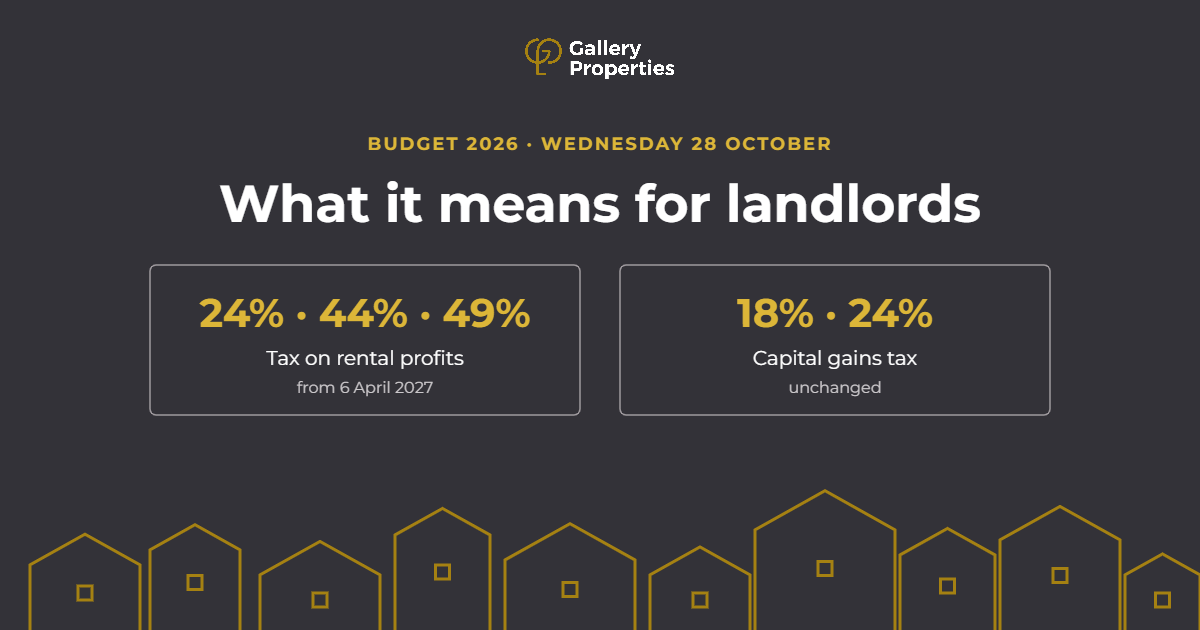
The Budget on 28 October 2026 put tax on rental profits up again. From 6 April 2027, landlords who own property in their own name will pay 24%, 44% or 49% on their rental profits, instead of the 22%, 42% and 47% already planned. Chancellor John Healey left capital gains tax and stamp duty rates alone. Here’s what changed, what didn’t, and what we’d do now.
In short
- The big change: tax on rental profits goes up by a further 2 percentage points, to 24%, 44% and 49%, from 6 April 2027.
- Making Tax Digital: still starts for landlords with income over £30,000 from April 2027, but there will be no penalty points for late quarterly updates in the first year.
- Letting agents will report more to HMRC: a consultation on rental income data from agents and deposit schemes opened on Budget day.
- Not changed: capital gains tax rates, stamp duty rates (including the 5% surcharge on additional homes) and inheritance tax thresholds.
- Our advice: ask your accountant to rework your April 2027 figures at the new rates. Don’t sell or restructure in a hurry.
Tax on rental profits: 24%, 44% and 49%
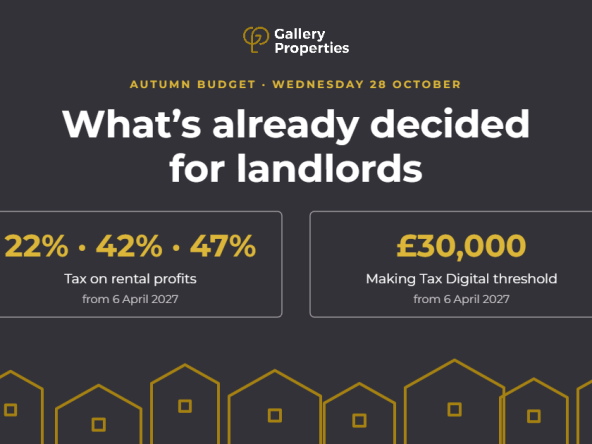
The November 2025 Budget had already set separate rates of income tax for property income from 6 April 2027: 22%, 42% and 47%. This Budget adds another 2 percentage points to each band from the same date. The government says 84% of income taxpayers won’t be affected, because most people don’t have rental or savings income.
The new rates apply in England, Wales and Northern Ireland to landlords who hold property personally or in a partnership. Limited companies pay corporation tax instead and aren’t affected by this change.
| Tax band | 2026/27 (now) | Planned in 2025 | From 6 April 2027 |
|---|---|---|---|
| Basic rate | 20% | 22% | 24% |
| Higher rate | 40% | 42% | 44% |
| Additional rate | 45% | 47% | 49% |
What it costs in practice: on every £10,000 of taxable rental profit, a basic-rate landlord pays £2,000 today and £2,400 from April 2027. A higher-rate landlord goes from £4,000 to £4,400. That’s £400 a year more on each £10,000, twice the rise we described in our Budget preview.
Mortgage interest: you still can’t deduct mortgage interest as an expense. You get a tax reduction instead. HMRC’s 2025 technical note says that reduction will be given at the “property basic rate” from April 2027. On that basis it would rise to 24% of your interest, which softens the rise a little. The Budget 2026 documents don’t restate this, so ask your accountant to confirm it once the Finance Bill is published.
Every Budget measure that affects landlords
| Measure | From | Who it affects |
|---|---|---|
| Property income tax rates rise to 24%, 44% and 49% | 6 April 2027 | Individual landlords in England, Wales and Northern Ireland. Not limited companies. |
| Making Tax Digital: no late-submission penalty points for quarterly updates in the first year | Tax year 2027/28 | Landlords joining in April 2027 (income over £30,000). You still have to send every update before you can file your tax return. |
| Property income data reporting: consultation on new reporting duties for letting agents and deposit schemes | Consultation open until 20 January 2027 | Letting agents and deposit schemes report; HMRC uses the data to check landlords’ tax returns. |
| High Value Council Tax Surcharge confirmed, with discounts, exemptions, a deferral scheme and a 100% premium on homes empty for 12 months or more | April 2028 | Owners of homes in England worth £2 million or more. |
| Stamp duty on rent under assured tenancies removed, to be confirmed in the Finance Bill | Took effect 1 May 2026 | Tenants of assured periodic tenancies, who no longer need to file stamp duty returns because rent is payable. |
| Self Assessment payments on account made in smaller, more regular instalments | April 2029 | Landlords who already make payments on account. |
| Warm Homes Plan capital grants cut by £1 billion; Boiler Upgrade Scheme kept at £400 million in 2027/28 | Spending period | Landlords hoping for grants towards energy upgrades. The government says most funding for low-income households is protected. |
| £100 Household Energy Payment through the council tax system | January 2027 | Households in council tax bands A to D in England, including tenants who pay the council tax. |
What hasn’t changed
- Capital gains tax: gains on residential property are still taxed at 18% or 24%, with a £3,000 annual exempt amount. The rumoured rise didn’t happen.
- Stamp duty: rates are unchanged, including the 5% surcharge on additional homes such as buy-to-lets.
- Inheritance tax: the £325,000 nil-rate band and £175,000 residence nil-rate band stay the same.
- No new annual property tax: nothing was announced to replace stamp duty or council tax.
- Making Tax Digital thresholds: still £30,000 from April 2027 and £20,000 from April 2028.
- Local Housing Allowance: the Budget documents don’t mention it, so no change was announced for tenants who claim housing support.
What we’d do now
- Ask your accountant to rework 2027/28 at 24%, 44% or 49%, including your mortgage interest and which tax band your rental profit falls into.
- Don’t rush into a limited company. Moving property into a company usually triggers stamp duty and capital gains tax now. It can still make sense for some landlords, but only after proper advice on your own numbers.
- Get ready for Making Tax Digital if your rental and self-employed income before expenses was over £30,000 in 2025/26. The first-year penalty easement gives you breathing space, not an exemption.
- Keep your records clean. HMRC will get more data from letting agents and deposit schemes, so your tax return should match what we report. If we manage your property, your monthly statements give your accountant the figures they need.
- Review your rent against the market. If your rent is well below local levels, a fair increase using the proper notice may help absorb the higher tax. We can tell you what your property would let for today.
For what was already decided before the Budget, read our Budget preview from 19 October. Remember that let properties in Worcestershire also need to be on the new landlord database by 14 March 2027.
Planning for April 2027?
We don’t give tax advice, but we can tell you what your property would let for, what it costs to run and what’s coming in compliance, so you and your accountant can plan with real numbers.
Book a free consultationCall 01386 443 597WhatsApp 07518 434 214See our landlord fees
Written by Lukasz Rusiecki, Managing Director of Gallery Properties. We’ve managed landlords’ homes across Evesham, Worcester and Worcestershire since 2010.
Last checked: 28 October 2026. This article is general information, not tax or financial advice. The figures are simplified examples that ignore personal allowances and other income. Speak to your accountant before acting. Sources: HM Treasury, Budget 2026; HMRC, Budget 2026 overview of tax legislation and rates and Annex A: rates and allowances; HMRC technical note on property income rates (2025); HMRC consultation on property income data reporting; High Value Council Tax Surcharge: government response; HMRC on Making Tax Digital.